



Cannabinoid Receptor
Cannabinoid Receptor
Cannabinoid receptors are currently classified into three groups: central (CB1), peripheral (CB2) and GPR55, all of which are G-protein-coupled. CB1 receptors are primarily located at central and peripheral nerve terminals. CB2 receptors are predominantly expressed in non-neuronal tissues, particularly immune cells, where they modulate cytokine release and cell migration. Recent reports have suggested that CB2 receptors may also be expressed in the CNS. GPR55 receptors are non-CB1/CB2 receptors that exhibit affinity for endogenous, plant and synthetic cannabinoids. Endogenous ligands for cannabinoid receptors have been discovered, including anandamide and 2-arachidonylglycerol.
Cannabinoid Receptor Isoform Specific Products
All Product Categories
-
Cannabinoid Receptor Inhibitors
(37)
View all products
-
Cannabinoid Receptor Agonists
(141)
View all products
-
Cannabinoid Receptor Antagonists
(76)
View all products
-
Cannabinoid Receptor Activators
(14)
View all products
-
Cannabinoid Receptor Modulators
(24)
View all products
-
Cannabinoid Receptor Chemical
(1)
View all products
-
Cannabinoid Receptor Inducer
(1)
View all products
-
Cannabinoid Receptor Degrader
(1)
View all products
-
Cannabinoid Receptor Controls
(2)
View all products
-
Cannabinoid Receptor Ligands
(13)
View all products
-
Cannabinoid Receptor Related Products (448)
Related Products (448)

-
Antibodies (1)
-
Cannabinoid Receptor Isoform Comparison

-
Hemopressin(rat)
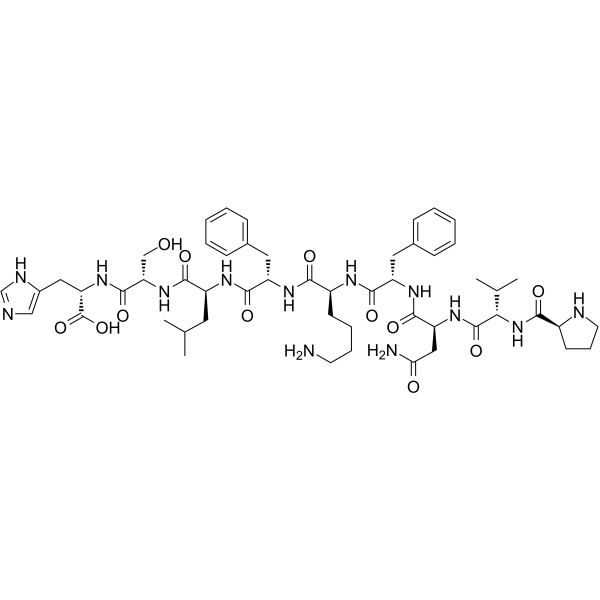 0 ImagesHemopressin(rat) is a nonapeptide derived from the α1-chain of hemoglobin, is originally isolated from rat brain homogenates. Hemopressin(rat) is orally active, selective and inverse agonist of CB1 cannabinoid receptors. Hemopressin(rat) exerts antinociceptive action in inflammatory pain models.
-
Arachidonoyl ethanolamide phosphate
 0 ImagesCat. No.: HY-134173CAS No.: 183323-26-4
-
L759633
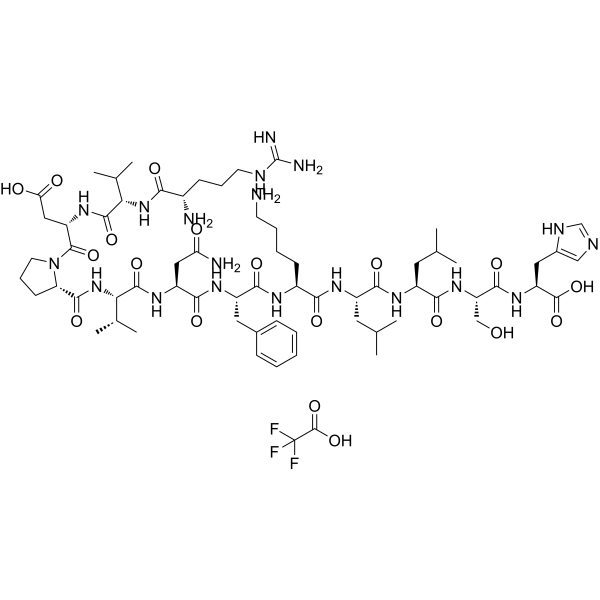
 0 ImagesL759633 is a potent and selective agonist of cannabinoid receptor (CB2) receptor, with Kis of 6.4 nM and 1043 nM for CB2 and CB1 receptors, respectively. L759633 can inhibit Forskolin-stimulated cAMP production.
-
10(R)-Hydroxy-9(S)-hexahydrocannabinol
 0 Images10(R)-Hydroxy-9(S)-hexahydrocannabinol is structurally similar to known phytocannabinoids.
-
b-AEA
 0 ImagesCat. No.: HY-103329CAS No.: 956605-71-3Synonyms: MM22; Biotinylated N-arachidonoylethanolamineb-AEA (MM22) is a biotinylated endocannabinoid analog with probe activity. b-AEA is able to accumulate intracellularly in a similar manner to the parent compound AEA. b-AEA does not interact with other components of the endocannabinoid system and therefore does not interfere with their function. b-AEA can be used to visualize the accumulation and intracellular distribution of endocannabinoids.
-
Cannabidiol-C8
 0 ImagesCat. No.: HY-170734CAS No.: 2552798-28-2Cannabidiol-C8 is structurally similar to known phytocannabinoids.
-
Cannabinodiol
 0 ImagesCannabinodiol, a cannabinoid analogue, is a phytocannabinoid.
-
Bay 59-3074
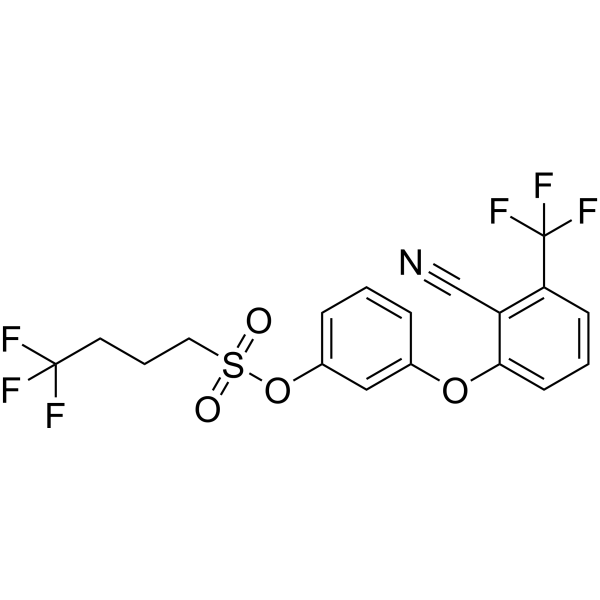 0 ImagesBay 59-3074 is a selective cannabinoid CB1/CB2 receptor partial agonist with Ki values of 48.3 and 45.5 nM at human CB1 and CB2 receptors, respectively. Bay 59-3074 has analgesic properties.
-
GAT211
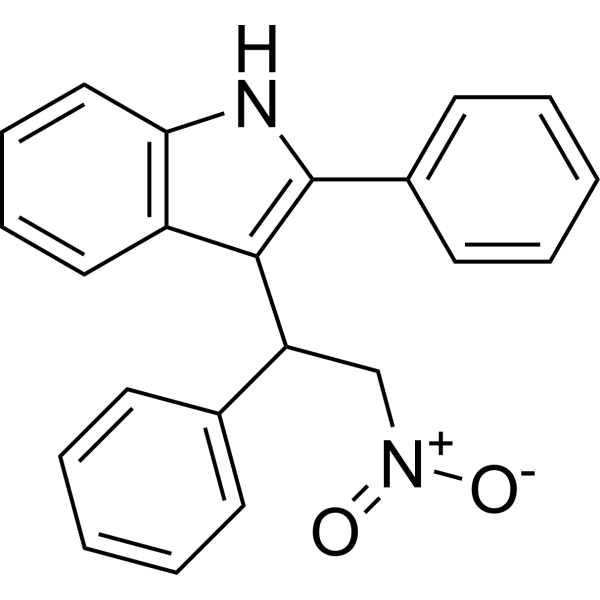 0 ImagesGAT211 is a cannabinoid 1 receptor (CB1R) positive allosteric modulator (PAM). GAT211 activates cAMP and β-arrestin2 with EC50 values of 260 nM and 650 nM, respectively. GAT211 inhibits GAT211 can be used for neuropathic and/or inflammatory pain research.
-
OMDM-6
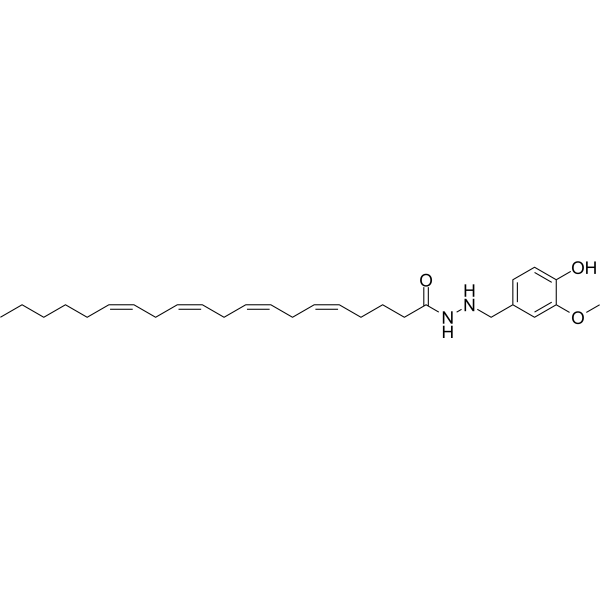 0 ImagesCat. No.: HY-135882CAS No.: 616884-67-4OMDM-6 is a hybrid agonist of vanilloid receptor type 1 (VR1, TRPV1) (EC50=75 nM) and cannabinoid receptor type 1 (CB1) (Ki=3.2 μM). OMDM-6 inhibits anandamide cellular uptake (ACU) with a Ki of 7.0 μM.
-
Noladin ether
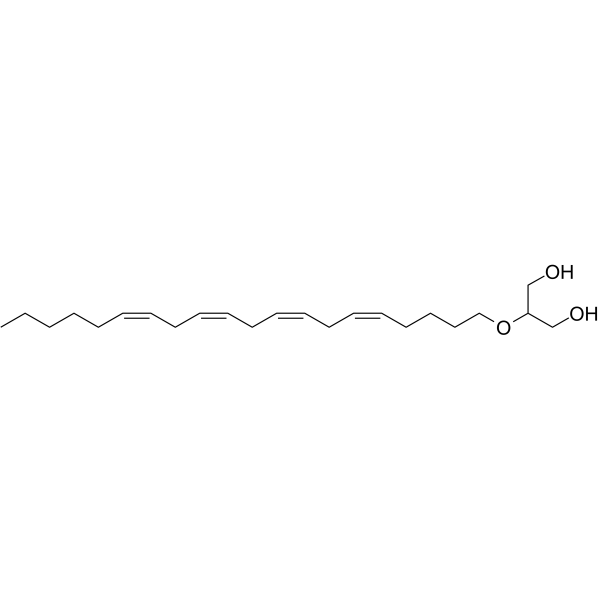 0 ImagesCat. No.: HY-110014CAS No.: 222723-55-9Noladin ether is a potent and selective agonist of cannabinoid CB1 receptor, with a Ki of 21.2 nM. Noladin ether can cause hypothermia, intestinal immobility, and mild antinociception.
-
CB2 modulator 1
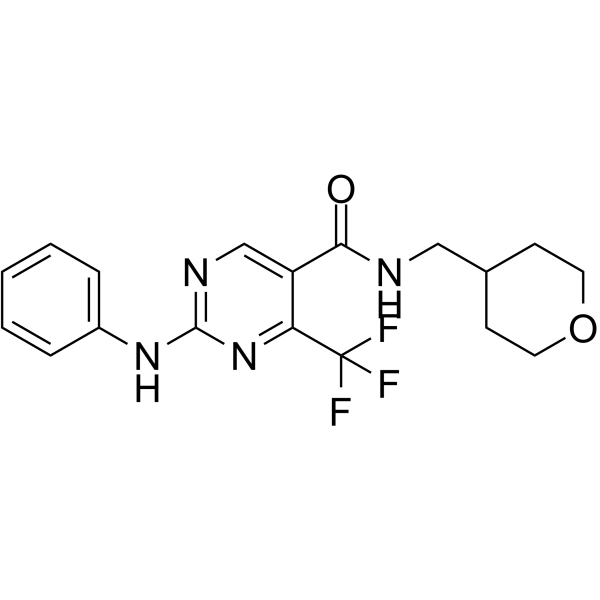 0 ImagesCB2 modulator 1 (compound 130) is a potent CB2 modulator. CB2 modulator 1 has the potential for immunedisorders, inflammation, osteoporosis, renal ischemia.
-
Pregnenolone-13C2,d2
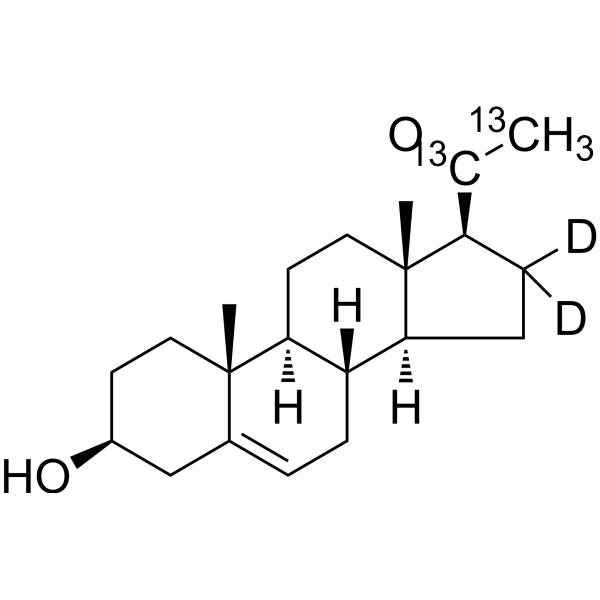 0 ImagesCat. No.: HY-B0151S1CAS No.: 2483824-26-4Synonyms: 3β-Hydroxy-5-pregnen-20-one-13C2,d2Pregnenolone-13C2,d2 is the deuterium and 13C labeled Pregnenolone (HY-B0151). Pregnenolone is a powerful neurosteroid, the main precursor of various steroid hormones including steroid ketones. Pregnenolone acts as a signaling-specific inhibitor of cannabinoid CB1 receptor, inhibits the effects of tetrahydrocannabinol (THC) that are mediated by the CB1 receptors. Pregnenolone can protect the brain from cannabis intoxication. Pregnenolone is also a TRPM3 channel activator, and also can weakly activate TRPM1 channels.
-
Tedalinab
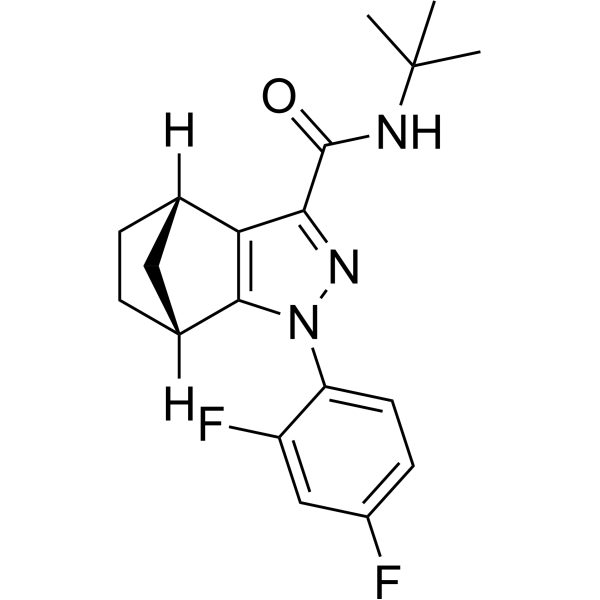 0 ImagesSynonyms: GRC-10693Tedalinab (GRC-10693) is a potent, orally active, and selective cannabinoid receptor 2 (CB2) agonist. Tedalinab has >4700-fold functional selectivity for CB2 over CB1. Tedalinab has potential for neuropathic pain and osteoarthritis treatment.
-
CB2R/FAAH modulator-3
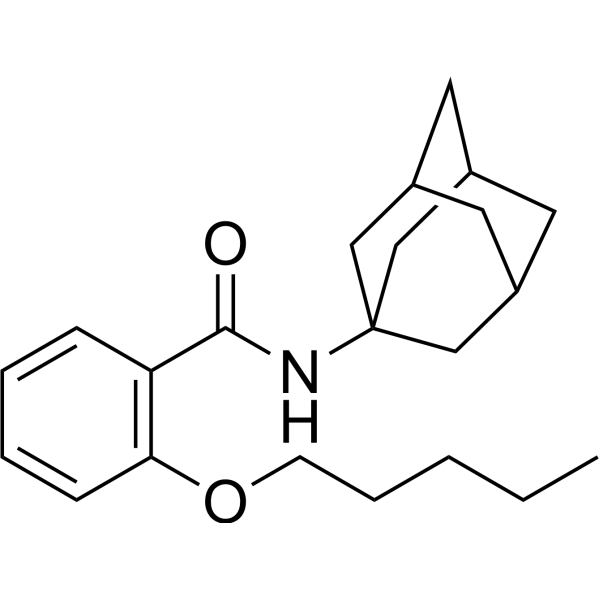 0 ImagesCB2R/FAAH modulator-3 (compound 27) is a dual targeting modulator that acts as a CB2R agonist and FAAH inhibitor. The Ki values for CB2R/FAAH modulator-3 are 20.1 and 67.6 nM for CB2R and CB1R, respectively, and the IC50 value for FAAH is 3.4 μM. CB2R/FAAH modulator-3 can be used in studies related to cancer, deleterious inflammatory cascades occurring in neurodegenerative diseases, and COVID-19 infection.




